
Book Appointment Now
The Invisible Crisis: Redefining “Weakness” and Spotting the Hidden Signs of Depression in Men
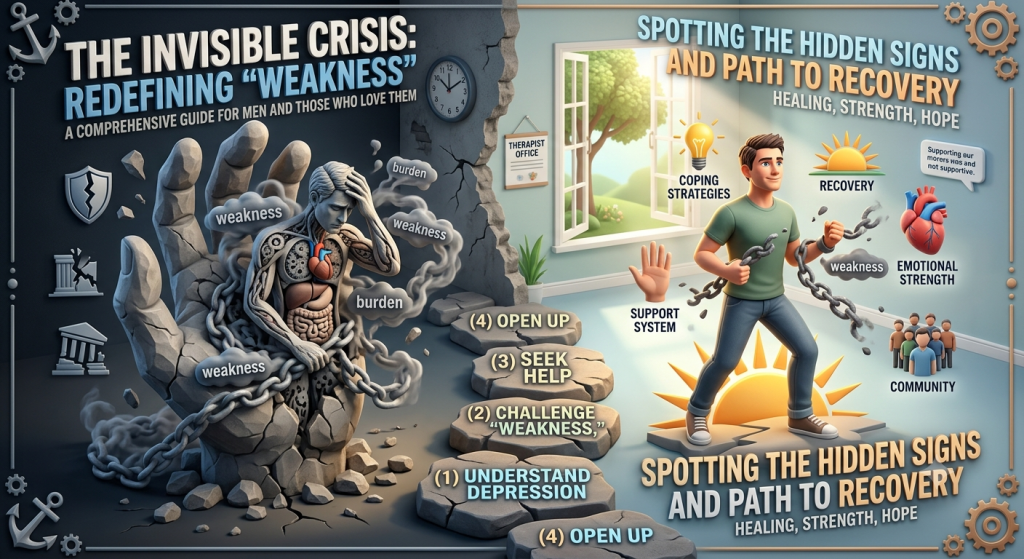
Ask the average person what depression looks like, and they will likely describe a familiar picture: an individual wrapped in a blanket, staring blankly out a rain-slicked window, visibly weeping, or unable to pull themselves out of bed. We have been conditioned to associate emotional distress exclusively with sadness, passivity, and outward vulnerability.
But for millions of men across the United States, Canada, and the United Kingdom, emotional pain wears a completely different, highly destructive mask.
In men, internal distress rarely looks like sadness. Instead, it frequently manifests as an uncharacteristic flash of anger, an obsessive drive to overwork, or a sudden escalation in reckless behavior. Because society teaches men from early childhood that vulnerability is a liability, they learn to suppress their emotional struggles, hiding behind a wall of stoicism.
This hidden coping style creates an invisible healthcare crisis. Depression in men is one of the most frequently misdiagnosed and overlooked conditions in modern healthcare. Because the underlying distress presents as socially accepted behaviors—like long hours at the office or competitive intensity—men themselves often fail to realize they are struggling with a clinical mood disorder.
If you are a professional, partner, or leader navigating an unexplainable sense of exhaustion, irritability, or emotional numbness, recognizing the true symptoms of depression in men is a critical step toward reclaiming your health, your career, and your relationships.
What Is It? The Behavioral Mask of Male Distress
Clinical depression, or Major Depressive Disorder (MDD), is a serious psychological condition that alters mood, cognition, energy levels, and physical health. While the underlying neurobiology remains identical across all genders, the behavioral expression of the condition is deeply influenced by cultural conditioning.
+—————————————————————–+
| THE GENDER GAP IN DISTRESS EXPRESSION |
+—————————————————————–+
| STEREOTYPICAL EXPRESSION | MALE-PATTERN EXPRESSION |
| – Crying & visible sadness | – Irritability & anger |
| – Social withdrawal | – Escapism (Overworking) |
| – Low energy & passivity | – Risk-taking & substance use|
+———————————+——————————-+
Societal expectations of masculinity dictate that men should be independent, strong providers who maintain complete emotional control. When a man experiences the heavy weight of depression, admitting to feeling sad can feel like an admission of weakness. To cope, his mind unconsciously converts feelings of helplessness into externalized actions, turning internal pain into behavioral shifts. This phenomenon is often referred to by experts as “male-pattern depression.”
Causes and Risk Factors: The Intersecting Triggers
The onset of depression in men is rarely caused by a single isolated event. It is typically fueled by a complex mix of biochemical vulnerabilities, environmental pressures, and life transitions:
- Professional Transitions and Loss of Identity: Men are often conditioned to tie their entire self-worth directly to their professional title, career performance, and financial success. A sudden job loss, an unexpected demotion, retirement, or financial instability can trigger an immediate emotional crisis.
- Relationship Breakdowns and Loneliness: Divorce, separation, or the death of a partner hits men exceptionally hard. Studies show men often maintain smaller personal support networks than women, leaving them highly isolated when a central relationship ends.
- Physical Health Decline and Aging: Managing a chronic illness, dealing with a severe injury, or experiencing a natural decline in physical strength or testosterone levels can deeply challenge a man’s sense of self-worth and autonomy.
- Early Trauma and Family Background: Growing up in a household that penalized emotional expression or living through Adverse Childhood Experiences (ACEs) increases the risk of developing hidden mental health issues later in life.
Symptoms and Warning Signs: Spotting the Hidden Indicators
Because standard medical checklists focus heavily on sadness and tearfulness, the true hidden signs of depression in men are easily missed. Recognizing these behavioral and physical shifts early can prevent a minor struggle from turning into a severe health crisis.
| Core Emotional Shifts | Behavioral Alterations | Physical Manifestations |
| Persistent, unprovoked irritability | Obsessive overworking and avoidance of home life | Chronic lower back pain and joint stiffness |
| Sudden, intense outbursts of anger or rage | Increased reliance on alcohol or substances | Severe insomnia or waking up exhausted |
| Complete loss of interest in hobbies or sports | Engaging in reckless driving or risky behavior | Sudden changes in appetite and digestion |
| Emotional numbness or an inability to feel joy | Secretive gambling or dangerous escapism | Unexplained chest tightness or headaches |
The Overwork Escape
One of the most common ways high-achieving men hide their struggle is through an obsession with their job. A man may arrive at the office before sunrise and stay long after dark, not out of passion, but because the constant noise of professional obligations prevents his mind from dwelling on his internal distress. This workaholism is often praised by organizations, keeping the underlying issue hidden.
Impact on Daily Life and Modern Business
When male-pattern depression is left unaddressed, the ripple effects can damage both an individual’s personal life and their professional performance.
In corporate environments, it often looks like an uncharacteristic drop in decision-making ability, a sudden increase in conflict with team members, or a total lack of long-term vision. Leaders who were once collaborative may become rigid, critical, and emotionally distant, directly impacting team morale and productivity.
On the domestic front, the toll is equally heavy. The chronic irritability and emotional withdrawal can fracture marriages, strain communication with children, and leave family members feeling like they are constantly walking on eggshells around a volcano waiting to erupt.
Scientific Research and Statistics: A Global Overview
Public health data across the United States, Canada, and the United Kingdom highlights a stark paradox: while women are diagnosed with depression at higher rates, men die by suicide at significantly higher rates. This emphasizes how critical it is to catch male mental health issues early.
- United States: According to data from the Centers for Disease Control and Prevention (CDC), men account for roughly 80% of all suicide deaths. The rapid expansion of corporate employee wellness programs and accessible telehealth services highlights an urgent effort to give men discreet ways to seek support before reaching a crisis point.
- United Kingdom: The Office for National Statistics (ONS) consistently reports that suicide remains the leading cause of death for men under the age of 50. This trend has prompted UK organizations to heavily promote digital mental health apps and confidential avenues for early care.
- Canada: Statistics from the Mental Health Commission of Canada (MHCC) reveal that approximately four out of five suicides are completed by men. Private health insurance companies across Canada are responding by expanding coverage for structured psychology and psychiatric services, making preventive care more affordable.
Therapy Approaches: Rebuilding from the Ground Up
Overcoming hidden depression requires finding a therapeutic environment where a man can drop his defensive mask without feeling judged. Modern mental health systems offer excellent, practical options tailored to how men prefer to solve problems.
1. Cognitive Behavioral Therapy (CBT)
CBT is a highly structured, objective approach that resonates well with many men. Instead of simply asking you to talk vaguely about your feelings, a CBT therapist focuses on helping you identify concrete, unhelpful thought patterns and behaviors. You learn to treat your thoughts as hypotheses to test, building practical strategies to manage stress and anger.
2. Action-Oriented and Group Therapies
Many men respond best to therapies that focus on goal-setting and shared experiences. Peer-led support networks—such as the global “Men’s Sheds” movement or specialized veterans’ and executives’ support groups—allow men to connect while working on a project or solving a problem together. This shared focus lowers the pressure of traditional face-to-face counseling.
Fortunately, modern online therapy networks make it easy to access these targeted treatments privately, allowing you to connect with a qualified therapist from your home or office.
Treatment Options: Clinical Interventions
For moderate to severe cases of depression, incorporating clinical support through a medical professional can help clear the cognitive fog and restore emotional balance.
- Psychiatric Services and Evaluation: Consulting a psychiatrist can help rule out underlying medical conditions (like low thyroid or low testosterone) that can mimic or worsen depressive symptoms.
- Targeted Medication Management: Medications such as SSRIs (Selective Serotonin Reuptake Inhibitors) or NDRIs (Norepinephrine-Dopamine Reuptake Inhibitors) can help balance brain chemistry. These options can improve energy levels, reduce irritability, and restore focus, creating the mental clarity needed to engage fully in therapy.
Lifestyle and Wellness Strategies: Proactive Self-Care
If you want to support your mental health naturally, focus on building small, high-impact habits that help regulate your nervous system.
+—————————————————————–+
| PROACTIVE MENTAL HYGIENE FOR MEN |
+—————————————————————–+
| 1. High-Intensity Movement –> Burns cortisol, raises dopamine |
| 2. Strategic Disconnection –> Shuts off corporate stress cycles |
| 3. Nutritional Stability –> Limits stimulants that fuel anger |
+—————————————————————–+
1. High-Intensity Exercise
Regular cardiovascular movement and strength training are powerful natural tools for lifting a low mood. Exercise burns off excess stress hormones like cortisol while stimulating the production of endorphins and dopamine, which helps improve overall mental clarity and focus.
2. Strategic Disconnection and Sleep
Set a firm cut-off time for checking work emails and phone notifications each evening. Give your brain time to unwind before bed to help manage insomnia and improve sleep quality, which is essential for regulating emotional responses during the day.
3. Nutritional Mindfulness
Limit your intake of central nervous system stimulants like caffeine and sugar, which can trigger sudden spikes in physical jitteriness and irritability. Similarly, minimize alcohol use; while it may offer brief temporary relief, alcohol is a central nervous system depressant that ultimately worsens long-term emotional distress.
When to Seek Professional Help
It is time to consider reaching out to a medical professional or a licensed counselor if you notice any of these warning signs:
- Your reliance on alcohol or substances to cope with stress is steadily increasing
- You find it difficult to control sudden outbursts of anger or frustration at home or work
- You feel a pervasive sense of numbness, isolation, or a total loss of joy in your accomplishments
- You experience persistent thoughts that your family or business would be better off without you
Key Takeaways
- Depression in men often looks like anger or overwork. True distress is frequently hidden behind a mask of irritation and constant busyness.
- Stoicism can delay critical recovery. Suppressing your emotions does not make them disappear; it simply forces them to leak out through physical ailments or behavioral shifts.
- Seeking help is a strategic decision. Connecting with support is a practical move to protect your health, your career, and your family.
- Private options are readily available. Modern telehealth networks, corporate wellness initiatives, and specialized apps offer confidential ways to access care.
Frequently Asked Questions
1. Why does depression in men often present as anger instead of sadness?
Men are often conditioned by societal expectations to believe that expressing sadness or vulnerability is a sign of weakness, while anger is viewed as an acceptable expression of power or control. When internal pain becomes overwhelming, a man’s mind frequently redirects that hurt into irritation or rage.
2. What are the most common physical signs of depression in men?
Common physical indicators include chronic lower back pain, persistent tension headaches, digestive issues like acid reflux or IBS, severe insomnia, and a constant feeling of physical exhaustion that sleep doesn’t seem to fix.
3. How can a partner tell if a man is depressed or just stressed about work?
Normal workplace stress is usually temporary and tied to a specific project or deadline. If his irritability, emotional withdrawal, increased drinking, or complete inability to relax lasts for more than two consecutive weeks and begins affecting his relationships, it may point to an underlying depressive condition.
4. Will seeking psychiatric services affect a man’s professional standing?
No. Licensed therapeutic consultations, medical visits, and telehealth services are completely confidential under strict privacy laws (like HIPAA in the US). Seeking help privately will not be shared with an employer or impact a professional license.
5. Does corporate health insurance usually cover individual therapy?
Yes. The vast majority of comprehensive corporate health insurance plans across the US, UK, and Canada provide extensive coverage for outpatient mental health care, including psychiatric evaluations, individual therapy, and prescription medications.
6. What resources do corporate employee wellness programs offer for men?
Most modern employee wellness programs feature an Employee Assistance Program (EAP) that provides confidential, short-term counseling sessions, stress management coaching, and digital mental health tools at no cost to the employee.
7. How does using a mental health app help an overworking professional?
Specialized mental health apps provide convenient, discreet resources for busy professionals. They offer features like real-time cognitive reframing tools to challenge stressful thoughts, mood-tracking systems, and short, guided breathing exercises designed to help lower baseline tension during a hectic workday.
8. Can low testosterone levels cause symptoms that look like depression?
Yes. A significant decline in testosterone can cause symptoms that closely overlap with depression, including chronic fatigue, brain fog, low libido, irritability, and a lack of motivation. A comprehensive medical evaluation can help identify if hormonal factors are contributing to your symptoms.
9. Why is practicing self-compassion so difficult for high-achieving men?
Many high-achieving men mistakenly believe that self-criticism is the engine behind their success. They worry that treating themselves with kindness will cause them to lose their competitive edge, when in reality, chronic self-blame simply increases stress and speeds up burnout.
10. How long does it typically take to see improvement once treatment begins?
While everyone’s path to recovery is unique, many men experience a noticeable lift in energy levels, improved focus, and reduced irritability within four to eight weeks of starting consistent Cognitive Behavioral Therapy (CBT) or an optimized medication plan.
Conclusion: True Strength Is Facing the Struggle
Silently enduring severe emotional distress does not protect your career or your family—it simply slowly drains your health and limits your potential. Recognizing that your current pattern of anger, overwork, or emotional isolation is a call for support from an overloaded nervous system is an important step toward recovery.
If you recognize these hidden signs in yourself or a loved one, remember that you do not have to navigate this journey alone. Reaching out to a qualified professional—whether through a workplace wellness resource, a private telehealth consultation, or an online counseling platform—is an investment in your future. Reclaim your time, your focus, and your peace of mind by prioritizing your mental fitness today.
To further customize your health journey:
Differentiate between burnout and male depression
Build an executive stress-management plan