
Book Appointment Now
Why You Can’t Just “Start”: The Hidden Mental Health Truth Behind Chronic Procrastination
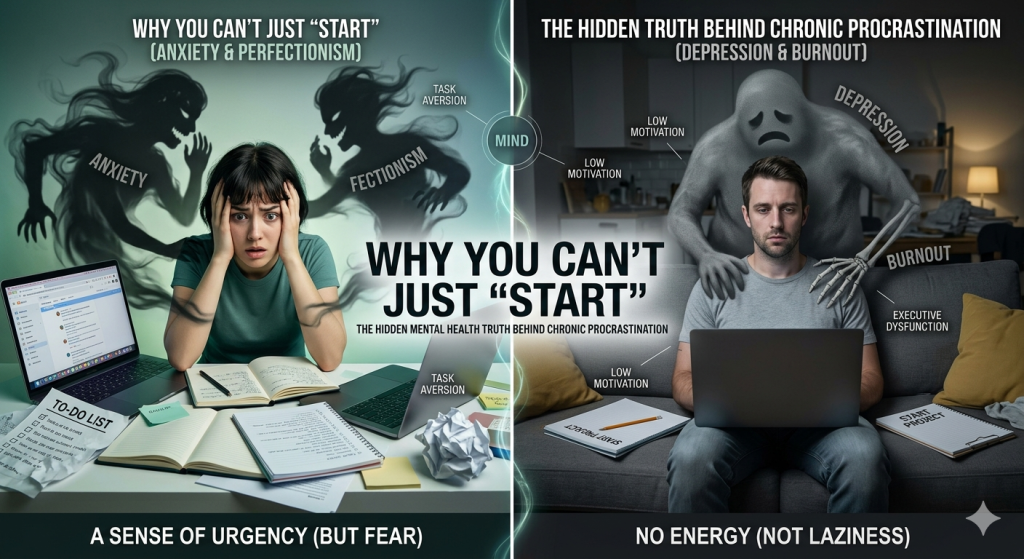
You know the feeling all too well. There is a high-stakes project sitting on your desk, a crucial medical appointment you need to schedule, or an important email that has been sitting in your drafts for over a week. The deadline is screaming down the track like a runaway train. You pull up your chair, open a blank document, look directly at the screen, and promise yourself: Today is the day I get this done.
Then, a strange and frustrating paralysis sets in.
Suddenly, your brain decides that cleaning out your email spam folder, organizing your kitchen cabinets by color, or scrolling through social media feeds is a critical priority. Hours slip by. The sun goes down, the guilt rolls in like a heavy fog, and you find yourself asking the exact same painful question you asked yesterday: Why can’t I just start? What is wrong with me?
For decades, society has provided a standard, critical answer: You are lazy. You lack willpower. You have poor time management skills, and you need to buy a better daily planner.
But modern neuroscientists, clinical psychologists, and psychiatric services have finally shattered that myth. Chronic procrastination is not a moral failing or a simple time management problem. It is a complex, deeply ingrained emotional regulation problem that acts as a profound survival mechanism for an overwhelmed nervous system.
If you are struggling to break this cycle, understanding how to stop procrastination requires shifting away from self-blame and diving into the hidden mental health triggers behind your task avoidance.
What Is It? The Clinical Blueprint of Chronic Procrastination
To solve a problem, you must first define it accurately. Occasional procrastination is a normal human experience—nearly everyone delays a tedious chore or a complex task now and then.
However, chronic procrastination is a persistent, structural pattern of unnecessarily delaying actions despite knowing that doing so will result in negative consequences, increased stress, missed opportunities, and psychological distress.
+—————————————————————–+
| THE CORE CYCLE OF TASK AVOIDANCE |
+—————————————————————–+
| Anticipated Task –> Emotional Discomfort –> Task Flight |
| (Triggers Threat) (Anxiety, Self-Doubt) (Procrastinate)|
+—————————————————————–+
When you avoid a critical piece of work, you are rarely avoiding the actual mechanical task itself. Instead, you are fleeing from the intense, uncomfortable emotions triggered by the task, such as:
- Deep-seated anxiety
- Overwhelming self-doubt
- Paralyzing fear of failure
- Frustration or intense boredom
In short, your brain views the project on your desk the exact same way it views a physical threat: as a predator to escape. Choosing an immediate distraction provides an instant hit of emotional relief, which reinforces the avoidance behavior and turns it into a hardwired habit loop.
Causes and Risk Factors: Why the Brain Chooses Avoidance
Chronic task avoidance does not happen by accident. It is typically fueled by several underlying cognitive frameworks, structural brain dynamics, and personality traits.
1. The Amygdala Hijack
Inside your brain, an ongoing battle occurs between the prefrontal cortex (the rational area responsible for long-term planning and executing tasks) and the limbic system (the ancient, emotional part of the brain seeking immediate pleasure and safety).
When a task feels too large or intimidating, your amygdala—the brain’s alarm system—perceives it as an immediate danger. The limbic system wins the battle, triggering a fight-or-flight response that forces you to escape the threat by turning to immediate comfort, like checking your phone or watching videos.
2. Maladaptive Perfectionism
Many chronic procrastinators do not lack standards; they suffer from standards that are impossibly high. If you subconsciously link your performance directly to your personal self-worth, the prospect of producing an imperfect piece of work feels devastating. By delaying the project until the final moments, you create a built-in psychological buffer: if the final result is sub-par, you can comfort yourself by blaming a lack of time rather than a lack of actual ability.
3. High Baseline Stress Levels
When your life is filled with systemic pressures—such as relationship strain, financial insecurity, or a toxic work environment—your overall cognitive bandwidth is dramatically compromised. An already exhausted brain simply does not possess the leftover energy needed to push past the initial friction of starting a complex task.
Symptoms and Warning Signs: Identifying the Internal Toll
Because society mislabels chronic avoidance as laziness, many people fail to realize that their inability to start a task is a sign of a dysregulated nervous system.
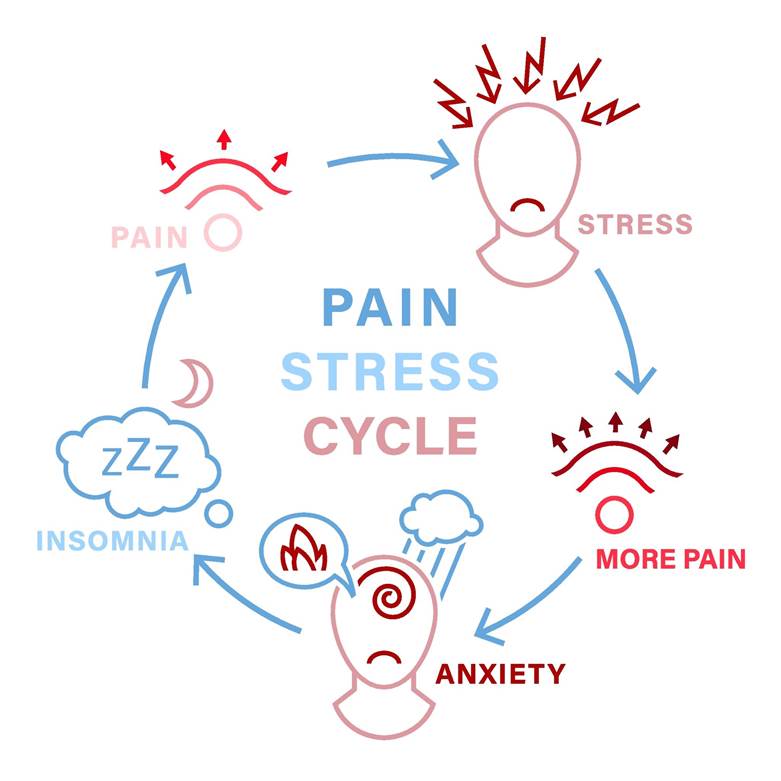
The Cyclical Relationship Between Chronic Worry and Physical Distress. Source: Anna Bergbauer / Getty Images
As illustrated above, when mental stress is left unmanaged, it creates a continuous physical feedback loop. In the context of task avoidance, this cycle presents several distinct warning signs across daily life:
- The “Procrastivity” Trap: Spending hours performing secondary, useful tasks (like deep-cleaning, doing laundry, or filing old documents) specifically to avoid the one high-priority project that actually matters.
- Persistent Muscle Tension and Fatigue: Carrying a physical weight in your shoulders, neck, and back because your brain is constantly stressed by unresolved obligations.
- Chronic Insomnia and Nighttime Worry: Lying awake for hours because the tasks you avoided during the day return to haunt your thoughts the moment your head hits the pillow.
- Extreme Brain Fog and Indecision: Feeling a total sense of paralysis when trying to decide where to start, leading to hours of sitting at a desk without accomplishing anything.
Impact on Daily Life: The Cost of Living in Limbo
Living in a constant state of task avoidance carries heavy consequences that extend far beyond missed project deadlines. It gradually erodes every pillar of a healthy, balanced life.
In your career, it severely caps your potential, leads to chronic underachievement, and triggers severe burnout as you constantly work in high-stress, last-minute scrambles. In your personal relationships, it leads to broken promises, forgotten chores, and missed obligations that leave partners, family members, and colleagues feeling frustrated and unvalued.
The heaviest toll, however, is internal. It destroys your self-esteem, creates a persistent undercurrent of shame, and leaves you feeling isolated from peers who seem to navigate their responsibilities with ease.
Scientific Research and Statistics: The Mental Health Connection
If you feel like you are fighting this battle completely alone, global public health statistics reveal an entirely different story. Modern clinical research shows that chronic task avoidance is intimately bound to recognized mental health and neurodivergent conditions.
| Mental Health Connection | Key Clinical Drivers | Impact on Task Initiation |
| Anxiety Disorders | Hypervigilance, catastrophic thinking, fear of negative evaluation | The task feels like an emotional threat, causing immediate avoidance. |
| ADHD & Neurodivergence | Severe executive dysfunction, low dopamine production | The brain struggles to sequence steps or find the motivation to begin dull tasks. |
| Clinical Depression | Emotional exhaustion, hopelessness, anhedonia | A total lack of physical and mental energy makes task completion feel impossible. |
Global health trends show that this issue is widespread across the Western world:
- United States: Studies suggest that roughly 20% of adult men and women are chronic procrastinators. The rapid expansion of modern telehealth networks and specialized psychiatric services reflects a growing need for targeted interventions to address executive dysfunction.
- United Kingdom: Research from major university health centers reveals a surging demand for evidence-based mental health apps and workplace employee wellness programs to help professionals handle work-related anxiety and chronic task paralysis.
- Canada: Public mental health studies emphasize that task avoidance is a leading contributor to workplace disability claims, forcing private health insurance providers to expand coverage for structured psychological care.
Treatment and Therapy Options: Rewiring the Brain’s Responses
Because chronic task avoidance is an emotional challenge, traditional time-management strategies like buying a better calendar or installing a blocking app rarely work long-term on their own. Sustainable recovery requires rewriting how your brain handles discomfort.
1. Cognitive Behavioral Therapy (CBT)
CBT is the premier, clinically proven therapeutic framework for overcoming chronic procrastination. A skilled therapist helps you isolate the distorted thoughts spinning through your mind (such as “If I can’t do this perfectly, there’s no point in trying”). Over a series of structured sessions, you learn to challenge these assumptions and replace them with realistic, balanced views that lower the emotional stakes of the task.
2. Acceptance and Commitment Therapy (ACT)
ACT takes a unique, mindful approach to behavioral change. Instead of trying to eliminate your anxiety or self-doubt, an ACT framework teaches you to accept those uncomfortable feelings as natural human responses. You learn to acknowledge your discomfort, let it sit quietly in the background, and move forward with your planned tasks anyway, guided by your core values.
Fortunately, you do not have to wait months on a local clinic’s waiting list to access these treatments. Modern online therapy platforms make it easy to connect with fully licensed, compassionate professionals from the safety and privacy of your own home.
Lifestyle and Wellness Strategies: How to Stop Procrastination Naturally
If you want to know how to stop procrastination naturally, you can implement several somatic, behavioral, and nutritional changes today to lower your nervous system’s stress levels.
The Two-Minute Rule for Lowering Friction
When a project feels overwhelmingly large, tell yourself that you only have to work on it for exactly 120 seconds. Open the document, type a single sentence, or review one file. If you want to stop after two minutes, give yourself full permission to do so. By radically lowering the barrier to entry, you bypass the amygdala’s alarm system. Once you break the initial physical friction of starting, you will find that continuing is much easier.
Micro-Segmenting and “Next-Step” Clarity
Vague goals are the fuel of chronic avoidance. Writing “Clean the house” or “Finish corporate strategy report” on your to-do list triggers immediate overwhelm. Instead, break your projects down into microscopic, undeniable physical actions. Replace broad goals with clear steps like: “Open Google Docs and type the title page” or “Pick up three items from the living room floor.”
Balancing Dopamine and Nutrition
Your brain’s ability to initiate a task relies heavily on your baseline physical health. Minimizing heavy stimulants like excess caffeine prevents rapid spikes in jittery adrenaline that feel identical to a panic attack. Regular cardiovascular exercise burns off excess stress hormones, while clean, nutrient-dense meals support stable blood sugar levels, keeping your cognitive focus sharp throughout the afternoon.
When to Seek Professional Help
It is time to consider seeking professional medical or therapeutic support if your pattern of task avoidance has caused a prolonged, negative impact on your life, such as:
- Receiving formal performance warnings at your workplace
- Experiencing severe financial strain due to unpaid bills or unfiled taxes
- Dealing with constant conflict in your close personal relationships
- Feeling a deep, pervasive sense of hopelessness, shame, or despair
Consulting a physician or a psychiatrist can help you determine if an underlying condition, like ADHD or an anxiety disorder, is driving your difficulties, allowing you to access a personalized recovery plan.
Key Takeaways
- Procrastination is emotional avoidance, not laziness. You are running from uncomfortable feelings, not the actual work.
- Your brain views difficult tasks as a threat. An overactive amygdala prioritizes short-term emotional comfort over long-term success.
- Traditional time-management tools are not enough. True recovery requires building your emotional resilience and lowering task friction.
- Professional care is highly accessible. Modern online therapy, premium mental health apps, and targeted telehealth services can provide the tools you need to break the cycle.
Frequently Asked Questions
1. If procrastination isn’t laziness, why do I feel so lazy?
You feel lazy because society has conditioned us to view a lack of productivity as a moral flaw. In reality, task paralysis is an exhausting internal battle where your brain is expending an immense amount of energy trying to protect you from perceived failure or distress.
2. How can I tell if my task avoidance is caused by ADHD or anxiety?
Anxiety-driven avoidance is typically fueled by fear, worry, and catastrophic thoughts about the final outcome. ADHD-driven avoidance is rooted in executive dysfunction, where an individual genuinely wants to start a task but their brain struggles with focus, organization, impulse control, and dopamine regulation. A formal assessment through psychiatric services can help clarify your experience.
3. Does corporate employee health insurance cover treatments for procrastination?
Yes. Most modern corporate health insurance plans provide robust coverage for outpatient psychotherapy, telehealth consults, and psychiatric evaluations aimed at managing stress, anxiety, depression, and ADHD.
4. What are employee wellness programs, and can they help me?
Employee wellness programs are workplace initiatives designed to support staff mental and physical health. They frequently provide confidential access to short-term counseling, mindfulness workshops, and productivity coaching to help professionals overcome chronic stress and task paralysis.
5. Can using a mental health app really help me start difficult tasks?
Yes. Many specialized mental health apps provide evidence-based toolkits, including guided breathing exercises to calm an oncoming anxiety spiral, focus timers, and cognitive reframing prompts designed to lower task friction in real-time.
6. What is “productive procrastination”?
Productive procrastination, or procrastivity, occurs when you avoid a critical, high-stakes task by staying busy with other lower-priority chores, like organizing your desk or doing laundry. While it makes you feel productive in the short term, it leaves the primary emotional threat unaddressed.
7. How does practicing self-compassion prevent future task avoidance?
Clinical studies show that individuals who forgive themselves for procrastinating on a past assignment are significantly less likely to avoid the next one. Beating yourself up only creates additional shame and anxiety, which increases the likelihood that your brain will flee from the next difficult task.
8. Is online therapy as effective as sitting down with an in-person counselor?
Yes, extensive clinical research indicates that video-based cognitive behavioral therapy delivers the same positive outcomes as traditional, face-to-face sessions for managing stress, anxiety, and task avoidance.
9. Why do I get a sudden burst of energy right before a deadline?
When a deadline is hours away, the real-world consequences of failing become immediate. This forces your body to release a massive surge of adrenaline and cortisol, which overrides your emotional avoidance and pushes you into action. While effective in an emergency, relying on this survival loop causes long-term burnout.
10. Can changing my physical environment help break task paralysis?
Absolutely. Because your brain pairs specific environments with specific emotional habits, sitting in a space where you regularly procrastinate can trigger immediate avoidance. Moving to a library, a quiet coffee shop, or even a different chair can give your brain a fresh canvas, lowering the friction of starting.
Conclusion: Take Back the Steering Wheel
Chronic procrastination is a heavy, stressful loop to live in, but it is not a life sentence. Recognizing that your challenge is rooted in emotional regulation rather than a flawed character is the first step toward building true resilience.
You do not have to navigate this journey completely alone. Whether you explore an employee wellness program, utilize your health insurance for a targeted evaluation, or match with a dedicated counselor on an online therapy network, reaching out for support is an act of courage. Give yourself permission to start small, treat your nervous system with kindness, and take back control of your time, your focus, and your life today.
To help tailor your next steps:
Explore the differences between ADHD and anxiety-based procrastination
Create a daily routine to reset an overwhelmed nervous system