
Book Appointment Now
Postpartum Depression While Breastfeeding: 10 Signs, Causes & What to Do
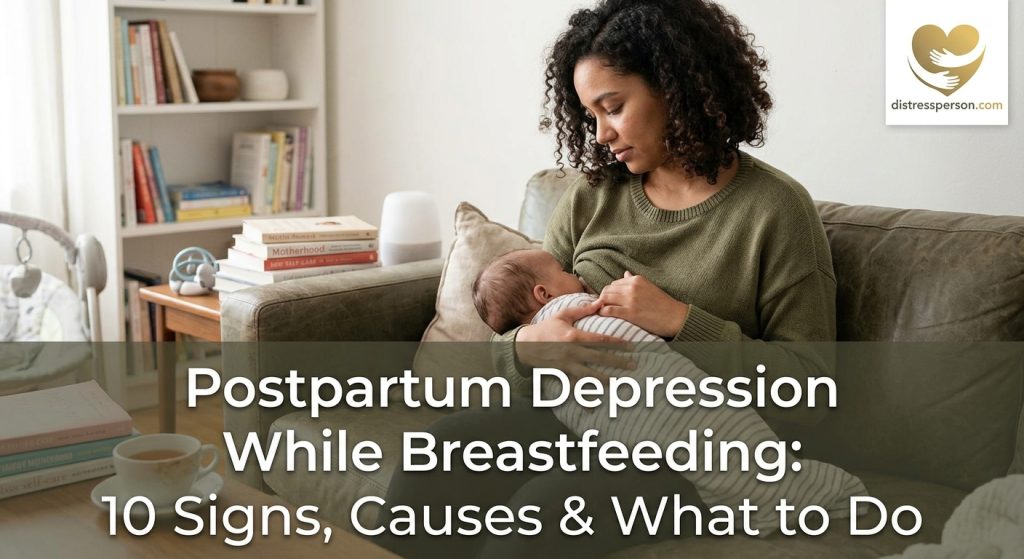
Postpartum depression while breastfeeding can be confusing and frightening. A mother may love her baby deeply and still feel sad, exhausted, anxious, disconnected, overwhelmed, or unable to cope.
Breastfeeding itself can also bring physical and emotional challenges. Feeding a baby around the clock, waking repeatedly at night, dealing with sore nipples, worrying about milk supply, and feeling pressure to breastfeed successfully can leave a new mother feeling drained.
But when sadness, hopelessness, anxiety, guilt, or emotional numbness become persistent or interfere with everyday life, it may be more than ordinary exhaustion or the temporary “baby blues.”
Postpartum depression (PPD) is a treatable mental health condition that can occur after childbirth, including while a mother is breastfeeding. Mothers with postpartum depression can usually continue breastfeeding, and healthcare professionals can help them choose appropriate treatment and support.
What Is Postpartum Depression While Breastfeeding?
Postpartum depression while breastfeeding means experiencing depression after having a baby during a period when you are breastfeeding.
Breastfeeding does not automatically cause postpartum depression. The relationship between breastfeeding and postpartum depression is complicated because mothers experiencing depression may have difficulty starting or continuing breastfeeding, while breastfeeding difficulties themselves can contribute to emotional distress.
A mother can therefore experience postpartum depression whether she is exclusively breastfeeding, combination feeding, pumping breast milk, or using formula.
The important question is not whether you are breastfeeding.
The important question is how you have been feeling and how those feelings are affecting your daily life.
10 Signs of Postpartum Depression While Breastfeeding
Every mother experiences the postpartum period differently. However, these symptoms deserve attention, particularly when they persist, become intense, or make it difficult to function.
1. You feel sad most of the time
You may find yourself crying frequently or feeling emotionally low without understanding exactly why.
You might think:
– “Why am I feeling like this?”
– “I should be happy.”
– “Everyone expects me to enjoy being a mother.”
– “Something is wrong with me.”
Feeling emotional after childbirth can be normal, but persistent or worsening symptoms should not simply be ignored.
2. You feel overwhelmed by breastfeeding
Breastfeeding can become emotionally exhausting when every feeding feels like another difficult task.
You may worry constantly about:
– whether your baby is getting enough milk
– whether your milk supply is adequate
– how long each feeding takes
– whether your baby is gaining enough weight
– whether you are breastfeeding “correctly”
– what other people think about your feeding choices
These concerns can become especially stressful when combined with sleep deprivation and limited support.
3. You feel guilty or like a bad mother
Postpartum depression can produce intense feelings of guilt and worthlessness.
A mother may think:
«“My baby deserves a better mother.”»
Or:
«“I can’t do anything right.”»
These thoughts can feel very real, but having them does not mean that you are a bad mother.
4. You have difficulty bonding with your baby
Some mothers with postpartum depression describe feeling emotionally disconnected from their baby.
You may care deeply about your baby’s safety but struggle to experience the happiness or emotional connection you expected.
This can create another layer of guilt:
“Why don’t I feel the way I thought I would?”
Difficulty bonding can occur with postpartum depression and is a reason to talk with a healthcare professional.
5. You feel anxious or constantly worried
Postpartum depression and anxiety can occur together.
You may repeatedly worry that something terrible will happen to your baby.
You might constantly check whether your baby is breathing, worry about illness, or feel unable to relax even when someone else is caring for your baby.
Persistent anxiety, fear, irritability, or feeling constantly on edge deserves attention.
6. You cannot sleep even when the baby is sleeping
New mothers naturally lose sleep because babies need frequent care.
But postpartum depression can involve difficulty sleeping even when you have an opportunity to rest.
For example, your baby finally falls asleep, someone else is watching the baby, and you have time to rest—but your mind continues racing.
Sleep problems can worsen emotional exhaustion, creating a difficult cycle.
7. You lose interest in things you previously enjoyed
You may stop wanting to talk to friends, leave the house, eat normally, watch your favorite programs, work, exercise, or participate in activities that once made you happy.
Everything may start feeling like effort.
8. You feel unusually angry or irritable
Postpartum depression does not always look like sadness.
Some mothers experience:
– intense irritability
– anger
– frustration
– emotional outbursts
– feeling easily overwhelmed
– resentment toward people who are not helping
You might even feel guilty about being angry afterward.
9. You feel hopeless or unable to cope
You may begin thinking:
“I can’t do this anymore.”
“Things will never get better.”
“I just want everything to stop.”
These feelings should be taken seriously.
Postpartum depression is treatable, and seeking professional help is an important step rather than a failure.
10. You have thoughts of harming yourself or your baby
This is an emergency.
If you are thinking about suicide, harming yourself, or harming your baby, seek urgent professional help immediately and do not stay alone with those thoughts.
Go to the nearest emergency department or contact your local emergency/crisis service. Ask someone you trust to stay with you and help you get professional care.
Why Can Breastfeeding Feel So Difficult When You Have Postpartum Depression?
Breastfeeding can involve a significant physical and emotional workload.
A mother may be feeding every few hours, including during the night. She may also be recovering physically from pregnancy and childbirth while simultaneously trying to care for a newborn.
Other pressures may include:
– lack of sleep
– breastfeeding difficulties
– painful nipples
– concerns about milk supply
– baby’s feeding difficulties
– financial pressure
– returning to work
– household responsibilities
– lack of childcare
– relationship problems
– unrealistic expectations about motherhood
– pressure from family members
These circumstances can make an already vulnerable period much harder.
Importantly, struggling with breastfeeding does not make you a bad mother.
Postpartum Depression and Breastfeeding: What Does the Research Say?
The relationship between breastfeeding and postpartum depression is not simple.
According to the CDC, there is not enough evidence to conclude that breastfeeding itself either increases or decreases the risk of postpartum depression. Researchers face an important challenge because depression can make breastfeeding difficult, while breastfeeding difficulties can also contribute to depression.
That means mothers should not blame themselves.
If breastfeeding is difficult, you deserve support.
If breastfeeding is going well but you are experiencing depression, you also deserve support.
And if breastfeeding is contributing to significant physical or emotional distress, discussing your options with a qualified healthcare professional is appropriate.
What About Postpartum Depression in Nigeria?
Postpartum mental health deserves particular attention in Nigeria.
A study published in BMC Pregnancy and Childbirth and available through PubMed Central (PMC) examined postpartum depression among 250 women attending primary healthcare centres in Eti-Osa Local Government Area of Lagos State.
The researchers reported postpartum depression in 35.6% of participants. The study also identified several factors associated with postpartum depression, including not receiving help with caring for the baby and having an unsupportive partner. After statistical adjustment, lack of help with baby care, intimate partner violence, an unsupportive partner, and postpartum blues remained predictors in that study.
This finding is particularly important because postpartum mental health is not simply an individual issue.
Support matters.
A mother who is expected to breastfeed, wake throughout the night, care for the baby, cook, clean, recover from childbirth, and manage everything else without adequate assistance may become severely overwhelmed.
The Lagos research also found that a substantial proportion of participants reported receiving no help caring for their baby.
This does not mean that lack of support automatically causes postpartum depression in every woman. The Lagos study was conducted in a specific population and cannot be assumed to represent every Nigerian mother or every breastfeeding mother.
However, it highlights why family, partners, communities and healthcare providers should take maternal emotional wellbeing seriously.
How Can a Breastfeeding Mother Get Help for Postpartum Depression?
The first step is to tell someone you trust and speak with a qualified healthcare professional.
This could include:
– a doctor
– obstetrician
– midwife
– nurse
– psychologist
– psychiatrist
– qualified counsellor
– maternal mental-health professional
You do not need to wait until your symptoms become unbearable.
Treatment can include talking therapies, psychological support, practical support and, when appropriate, medication.
The NHS notes that treatments can include talking therapies such as cognitive behavioural therapy (CBT) and antidepressants, and that many antidepressants can be used during breastfeeding when appropriately prescribed.
The CDC similarly advises mothers to tell their healthcare provider that they are breastfeeding when discussing medication so that treatment can be selected appropriately.
Do not start, stop, or change antidepressant medication on your own.
A healthcare professional can consider your symptoms, medical history, breastfeeding status and the specific medication before recommending treatment.
Can You Continue Breastfeeding If You Have Postpartum Depression?
In many cases, yes.
Having postpartum depression does not automatically mean that you have to stop breastfeeding.
The CDC states that mothers with postpartum depression can usually continue breastfeeding while receiving appropriate treatment and support.
However, every mother’s situation is different.
If breastfeeding is painful, extremely stressful, affecting your mental health, or becoming difficult to maintain, speak with a healthcare professional and, where available, a qualified lactation professional.
Your mental health matters too.
The goal should not be to make a mother feel guilty about breastfeeding.
The goal should be to help the mother and baby receive appropriate care.
7 Practical Ways to Support Your Mental Health While Breastfeeding
1. Ask for specific help
Instead of saying “I need help,” try asking someone to:
– prepare a meal
– wash dishes
– do laundry
– hold the baby while you shower
– help with an older child
– accompany you to an appointment
– allow you to sleep while they handle other responsibilities
2. Protect opportunities for sleep
You may not be able to sleep continuously with a newborn, but practical support can create opportunities for rest.
3. Talk about how you really feel
Do not hide serious symptoms simply because you are afraid people will judge you.
4. Stop comparing yourself with other mothers
Social media often shows the smiling version of motherhood.
It does not show every sleepless night, painful feeding, argument, anxiety attack, or moment of doubt.
5. Get breastfeeding support when needed
If you are struggling with latch, milk supply, pain or feeding frequency, ask a qualified professional for assistance.
Solving a feeding problem can sometimes remove one source of stress.
6. Accept that asking for help is not weakness
Motherhood was never meant to be a one-person job.
7. Seek professional help if symptoms persist
You do not have to diagnose yourself.
A healthcare professional can help determine whether what you are experiencing is postpartum depression, anxiety, another condition, or a combination of problems.
Postpartum Depression vs Baby Blues: What’s the Difference?
The “baby blues” are common during the first days after childbirth and typically improve within about two weeks.
Postpartum depression is more persistent or severe and can interfere significantly with daily life.
Symptoms can include persistent sadness, hopelessness, guilt, anxiety, irritability, difficulty sleeping, difficulty concentrating, loss of interest and difficulty bonding with the baby.
A simple way to think about it is:
Baby blues: temporary emotional changes that generally improve within about two weeks.
Postpartum depression: symptoms that persist, worsen, or significantly interfere with your ability to function and cope.
If you are unsure, speak with a healthcare professional rather than trying to determine the diagnosis yourself.
Frequently Asked Questions About Postpartum Depression While Breastfeeding
Can breastfeeding cause postpartum depression?
Breastfeeding itself has not been established as a direct cause of postpartum depression. The relationship is complicated because breastfeeding difficulties and depression can influence each other.
Can I have postpartum depression even if I love my baby?
Yes.
Loving your baby and experiencing postpartum depression can happen at the same time. Depression is a health condition; it is not proof that you do not love your child.
Is it normal to cry while breastfeeding?
Occasional crying or emotional moments can happen after childbirth. However, frequent crying combined with persistent sadness, hopelessness, anxiety, guilt, loss of interest or difficulty coping deserves professional attention.
Can postpartum depression affect breastfeeding?
It can. Depression may make it more difficult for some mothers to initiate or maintain breastfeeding. Breastfeeding difficulties can also increase emotional stress.
Can I take antidepressants while breastfeeding?
Some antidepressants can be used during breastfeeding, but the appropriate medication depends on the individual. Talk to your healthcare professional and tell them that you are breastfeeding before starting or changing medication.
Should I stop breastfeeding if I have postpartum depression?
Not necessarily. Mothers with postpartum depression can usually continue breastfeeding, but your individual circumstances should be discussed with a qualified healthcare professional.
How long can postpartum depression last?
Postpartum depression varies from person to person. Without appropriate support or treatment, symptoms can persist. With appropriate treatment, many people improve. The NHS notes that postnatal depression often improves within several months with treatment, although some cases last longer.
What if my partner does not support me after childbirth?
Tell someone you trust and seek additional support from family, friends, healthcare professionals or community resources.
The Lagos study found that lack of help with baby care and having an unsupportive partner were associated with postpartum depression among the women studied.
When should I seek urgent help?
Seek emergency help if you have thoughts of suicide, seriously harming yourself, or harming your baby, or if you feel unable to keep yourself or your baby safe.
Do not remain alone with an immediate safety concern.
You Don’t Have to Suffer in Silence
Breastfeeding can be a beautiful experience, but it can also be physically demanding and emotionally exhausting.
You can love your baby and still need help.
You can be grateful for your baby and still feel depressed.
You can want to breastfeed and still struggle.
And you can be a good mother while admitting that you are not okay.
Postpartum depression is a medical and mental-health concern—not a character flaw.
If you recognize several of the symptoms described in this article, consider speaking with a qualified healthcare professional. Getting help early can make a meaningful difference.
Most importantly, you do not have to carry motherhood alone.
Medical Disclaimer
This article is intended for general educational and informational purposes only. It does not diagnose, treat or replace advice from a qualified healthcare professional. If you believe you may have postpartum depression or another mental-health condition, speak with a doctor, midwife, psychologist, psychiatrist or other appropriately qualified healthcare professional. If you are in immediate danger or believe you may harm yourself or your baby, seek emergency medical assistance immediately.