
Book Appointment Now
How to Stop Anxiety from Controlling Your Life: A Practical Guide for Adults
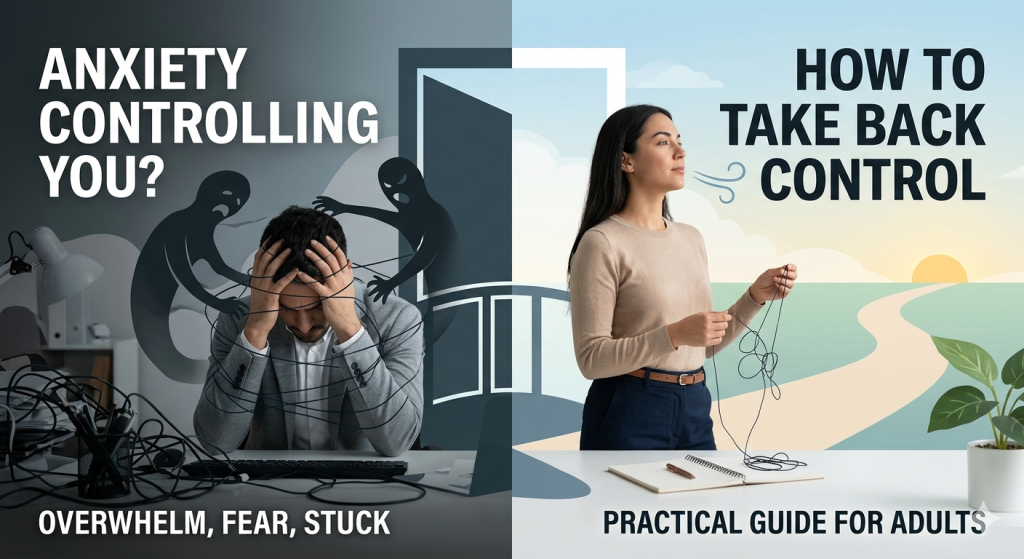
If you are reading this, chances are your mind feels like a browser with seventy open tabs, all playing different videos at the same time. You might feel a familiar tightness in your chest, a subtle tremor in your hands, or a persistent whisper in your mind insisting that something is about to go terribly wrong.
Living with chronic worry is exhausting. It dictates what you say, where you go, and how you sleep. But here is the grounding truth: you do not have to live at the mercy of your nervous system. Learning how to stop anxiety is not about erasing the emotion entirely—fear is a natural human response—it is about reclaiming your steering wheel. This evidence-based guide offers actionable, clinically backed strategies to help you break the cycle and live freely.
What Is It? Understanding the Anatomy of Worry
Anxiety is the body’s natural response to stress. It is a future-oriented emotional state characterized by feelings of tension, worried thoughts, and physical changes like increased blood pressure.
At its core, it is an overactive alarm system. In prehistoric times, our “fight-or-flight” response protected us from physical predators. Today, that same physiological response is triggered by abstract stressors: an ambiguous email from your boss, a looming bill, or a text message left on “read.” When this alarm stays turned on long after the threat has passed, it transitions from a protective mechanism into a disruptive burden.
Causes and Risk Factors
Anxiety does not develop in a vacuum. It is typically the result of a complex, intertwined web of biological, psychological, and environmental factors:
- Genetics and Brain Chemistry: A family history of mood disorders increases your vulnerability. Misalignments in neurotransmitters—the brain’s chemical messengers like serotonin and dopamine—play a significant role in how we process fear.
- Environmental Stressors: Chronic work pressure, financial instability, relationship breakdowns, or major life transitions (like moving or changing careers) can overload the nervous system.
- Trauma and Adverse Childhood Experiences (ACEs): Experiencing or witnessing trauma, abuse, or neglect earlier in life reshapes how the brain perceives safety and threat.
- Personality Factors: Individuals with perfectionist tendencies, a high need for control, or a naturally cautious temperament are more prone to chronic worry.
Symptoms and Warning Signs
Anxiety is a master of disguise. It frequently manifests as physical ailments, leading people to visit emergency rooms convinced they are experiencing a medical crisis. Recognizing these signs is the first step toward managing them.
| Cognitive & Emotional Symptoms | Physical Symptoms | Behavioral Symptoms |
| Persistent, uncontrollable looping thoughts | Accelerated heart rate or palpitations | Avoiding social gatherings or specific places |
| Irritability and a short emotional fuse | Shortness of breath or chest tightness | Procrastination or paralysis when making decisions |
| A constant sense of impending doom | Chronic fatigue and muscle tension | Hypervigilance (constantly scanning for danger) |
| Difficulty concentrating (“mind going blank”) | Gastrointestinal issues (nausea, IBS) | Sleep disturbances (insomnia or waking up anxious) |
Impact on Daily Life
When anxiety dictates your choices, your world gradually shrinks. It erodes your self-confidence and alters how you interact with your environment.
In the workplace, it can present as over-preparation, burnout, or a complete avoidance of leadership opportunities due to imposter syndrome. In personal relationships, it manifests as a constant need for reassurance, emotional withdrawal, or irritability that strains bonds with partners and family. Over time, the exhaustion of fighting your own mind leads to deep loneliness, leaving you feeling isolated even in a crowded room.
Scientific Research and Statistics: A Global Perspective
If you feel isolated in your struggle, the data shows you are far from alone. Modern mental health trends across the US, UK, and Canada reveal that anxiety is one of the defining healthcare challenges of our time.
- United States: According to the National Institute of Mental Health (NIMH), roughly 19.1% of adults experience an anxiety disorder in any given year. Furthermore, the rise of modern telehealth and online therapy networks reflects an unprecedented consumer shift toward digital mental health interventions.
- United Kingdom: The Mental Health Foundation reports that nearly 1 in 10 people in the UK meet the criteria for a formal diagnosis. This surge has placed immense strain on NHS talking therapies, prompting a massive corporate push into employee wellness programs and premium mental health apps.
- Canada: Data from the Centre for Addiction and Mental Health (CAMH) indicates that by age 40, one in two Canadians will have—or have had—a mental illness. Private health insurance providers across Canada have responded by expanding coverage for psychological services to meet this demand.
Treatment Options
Recovering your peace of mind is entirely possible. Modern medicine and psychiatry offer robust, highly structured pathways to long-term recovery.
Psychiatric Services & Medication
For moderate to severe cases, consulting a medical professional for specialized psychiatric services can provide vital relief. Psychiatrists can prescribe medications to alter brain chemistry and reduce the intensity of your symptoms.
- SSRIs and SNRIs: Selective Serotonin Reuptake Inhibitors (like sertraline or escitalopram) are standard daily maintenance medications that help stabilize mood over time.
- Benzodiazepines: These fast-acting sedatives are occasionally prescribed for acute, short-term panic episodes. Because they carry a risk of dependency, medical professionals monitor their use closely.
Therapy Approaches
Psychotherapy remains the gold standard for uncovering the root causes of internal distress and building lasting resilience. Fortunately, the rise of licensed online therapy platforms has made accessing evidence-based care easier than ever.
+——————————————————————-+
| EVIDENCE-BASED THERAPIES |
+————————————+——————————+
| Cognitive Behavioral Therapy (CBT) | Exposure Therapy |
| Identifies and rewires distorted | Gradually, safely confronts |
| thought patterns and behaviors. | fears to reduce sensitivity. |
+————————————+——————————+
1. Cognitive Behavioral Therapy (CBT)
CBT is the most thoroughly researched therapeutic framework for managing worry. It operates on a simple premise: your thoughts influence your feelings, which then dictate your behavior. A CBT therapist helps you identify cognitive distortions—such as “catastrophizing” (assuming the worst possible outcome)—and systematically replace them with objective, balanced thoughts.
2. Acceptance and Commitment Therapy (ACT)
Instead of fighting or trying to eliminate anxious thoughts, ACT teaches you to change your relationship with them. You learn to acknowledge your worries with mindfulness, notice them without judgment, and commit to taking actions that align with your personal values anyway.
Lifestyle and Wellness Strategies
If you are looking for how to stop anxiety naturally, integrating evidence-based lifestyle changes into your daily routine can substantially lower your baseline stress levels.
Somatic Grounding Techniques
When an anxious spiral begins, your brain loses touch with the physical present. You can interrupt this process using the 5-4-3-2-1 Grounding Method. Take a slow, deep breath and identify:
- 5 things you can see around you.
- 4 things you can physically touch.
- 3 things you can hear.
- 2 things you can smell.
- 1 thing you can taste.
This exercise forces your brain to shift its processing energy away from internal worries and back to your physical senses.
Nutrition and Vagal Tone
Your gut and your brain are in constant communication via the vagus nerve. Minimizing central nervous system stimulants—like caffeine and refined sugars—prevents rapid spikes in adrenaline that feel identical to panic attacks. Regular cardiovascular exercise acts as a natural reset switch, burning off excess cortisol and stimulating the release of mood-lifting endorphins.
Prevention Tips
Preventing anxiety from building up requires proactive upkeep of your mental health. Consider these foundational daily habits:
- Establish Clear Boundaries: Learn to say no to extra obligations at work or in your social life before your schedule becomes overwhelming.
- Incorporate Digital Detoxes: Constant exposure to breaking news and curated social media feeds keeps your brain in a state of low-grade alert. Set a firm cut-off time for your screens each evening.
- Prioritize Sleep Hygiene: Sleep deprivation impairs the prefrontal cortex—the area of the brain responsible for regulating emotional responses. Maintain a consistent sleep schedule to support emotional stability.
Expert Recommendations
Mental health professionals consistently emphasize that recovery relies on consistency rather than perfection.
Instead of waiting for an intense wave of worry to hit, build your coping tools during moments of calm. Utilize structured mental health apps to practice mindfulness, track your daily triggers, and learn deep diaphragmatic breathing. By training your nervous system to rest when things are peaceful, it becomes much easier to access that sense of calm when challenges arise.
Key Takeaways
- Anxiety is an alarm system, not a crystal ball. It predicts threats, but it does not accurately forecast your reality.
- Recovery is multifaceted. Combining professional therapy with lifestyle adaptations offers the most sustainable pathway forward.
- Digital tools are highly accessible. Modern telehealth, online therapy, and dedicated apps bring clinical support straight to your home.
- Physical wellness directly shapes your mental state. Consistent sleep, balanced nutrition, and regular movement significantly lower baseline stress.
Frequently Asked Questions
1. How can I tell the difference between normal worry and an anxiety disorder?
Normal worry is typically short-lived, tied to a specific problem (like an upcoming presentation), and resolves once the situation passes. An anxiety disorder is persistent, lasts for months, feels disproportionate to the actual situation, and actively interferes with your ability to function daily.
2. How do I stop an oncoming panic attack immediately?
Focus entirely on slowing down your breath using the Box Breathing technique: inhale deeply for 4 seconds, hold for 4 seconds, exhale slowly for 4 seconds, and hold empty for 4 seconds. Repeat this cycle four or five times to signal to your nervous system that you are safe.
3. Can I completely cure my anxiety naturally?
Many individuals successfully manage mild to moderate tension through lifestyle changes, including consistent exercise, mindfulness, dietary changes, and setting healthy boundaries. However, severe or chronic symptoms usually show the best improvement when natural strategies are combined with professional therapeutic support.
4. What role do employers play in managing stress?
Many companies offer employee wellness programs or Employee Assistance Programs (EAPs). These initiatives often provide free, confidential access to short-term counseling, stress management resources, and mental health workshops.
5. Does health insurance typically cover mental health treatment?
Yes, most modern health insurance policies in the US, Canada, and the UK offer coverage for mental health services. This often includes outpatient therapy sessions, psychiatric consultations, and prescription medications, though exact coverage details vary by provider.
6. How effective is online therapy compared to traditional in-person sessions?
Clinical studies show that video-based therapy is just as effective as in-person counseling for treating generalized anxiety, panic disorders, and depression. It offers the added benefits of shorter waiting times, lower costs, and the comfort of speaking from your own home.
7. Why does my anxiety feel much worse first thing in the morning?
This is a very common experience driven by the Cortisol Awakening Response (CAR). Your body naturally increases its production of cortisol (the stress hormone) during the first hour after you wake up to help you feel alert. If your nervous system is already sensitized, this natural hormone spike can feel like sudden dread.
8. Can certain foods or drinks trigger a physical feeling of panic?
Yes. High doses of caffeine, alcohol, refined sugars, and heavily processed additives can trigger physical sensations—such as a racing heart, sweating, and jitters—that closely mimic or trigger panic states.
9. What should I look for when choosing an online therapy platform?
Ensure the platform employs fully licensed, accredited mental health professionals (such as LCSWs, LMFTs, or clinical psychologists). Look for services that use secure, HIPAA-compliant messaging and video software, and check whether they accept your insurance.
10. How long does it take to see progress once I start treatment?
Many individuals notice a meaningful difference in their symptom levels within 4 to 8 weeks of starting consistent Cognitive Behavioral Therapy (CBT) or beginning an optimized medication plan.
Conclusion: Take the Next Step Toward Your Peace of Mind
Anxiety is an incredibly heavy weight to carry alone, but it is a highly treatable condition. Recognizing that you need a helping hand is not a sign of weakness—it is an important step toward reclaiming your life.
If your daily life, sleep, or personal relationships feel overwhelmed by persistent worry, please consider reaching out to a qualified professional. Whether you use an employee wellness program, consult a specialist via telehealth, or schedule a session through a dedicated online therapy network, taking action today can change your tomorrow. You deserve to live a life shaped by your hopes and goals, rather than your fears.